



Every three years, Plast provides an accurate snapshot of the state of the art in the plastics and rubber industry. The twentieth edition, scheduled from June 9 to 12, 2026 at Fiera Milano–Rho, is no exception: the profile of exhibitors and the nature of the technologies on display faithfully reflect the tensions and opportunities shaping the sector at a global level.
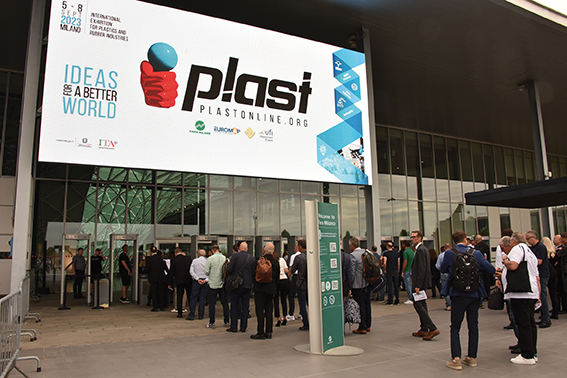
For professionals in film, printing, and flexible packaging converting, the exhibition offers a privileged vantage point on technologies and trends that are reshaping the supply chain. On the technological front, film extrusion lines, both monolayer and multilayer, will play a key role, with increasing focus on structures that facilitate recycling: mono-material solutions, easily separable components, and compatibility with existing collection streams. European regulatory pressure, from the Packaging Regulation to mandatory minimum recycled content, has turned these solutions into an industrial priority.
Automation, artificial intelligence, and digitalization will not merely be buzzwords in the exhibition halls, but integrated technologies within the machines on display. In converting processes, this translates into systems for in-line control of thickness, tension, and register, predictive algorithms to reduce downtime, and interfaces that communicate with company management systems. Consistent quality in short runs and process traceability are now market requirements, no longer advantages reserved for those who invest more.
Sustainability runs throughout the entire exhibition. Companies in the film and converting sector are genuinely changing their approach, driven by a convergence of factors: regulations, pressure from large-scale retail, and growing consumer awareness. At Plast 2026, this transition will be clearly visible: machines designed to process polymers from mechanical or chemical recycling, solutions for reducing thickness without compromising barrier performance, and lamination technologies that eliminate components that are difficult to separate. This is not greenwashing, those who fail to adapt risk losing customers even before losing markets.
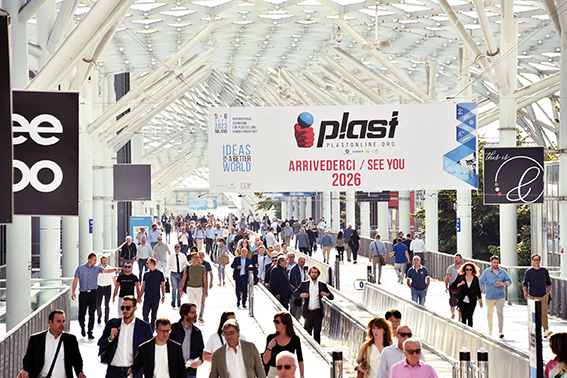
Structural challenges remain significant: volatility in raw material costs and the need to invest in R&D in a context of compressed margins. Added to this is the increasing complexity of packaging specifications, which require ever more customized structures. The exhibition also serves a strategic guidance function: direct comparison between competing technologies helps converters make informed decisions.
Plast cannot compete with the K fair in terms of size or as a global benchmark for the entire industry. But that is not its mission. The Italian exhibition has a valuable specificity: it is a place where the national supply chain, one of the most qualified in the world in the construction of film, extrusion, and converting machinery, meets converters directly, without intermediaries. For those operating in the flexible packaging sector, this physical proximity between supply and demand is a concrete advantage: faster responses, stronger relationships, and solutions better tailored to real needs.
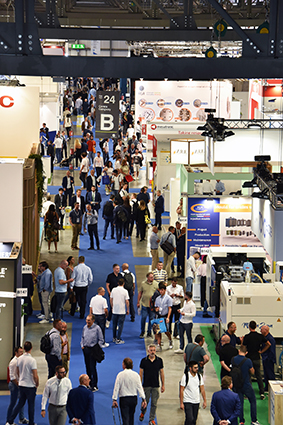 A rich program of technical conferences
These meetings will address the topic of plastics and industrial innovation from different perspectives.
On June 9, from 2:30 PM to 4:00 PM, the conference titled “Plastic: public enemy or designated victim?” will take place, organized in collaboration with Ipackima srl and Largo Consumo. The event will provide an open forum to discuss the changes affecting the packaging sector, highlighting both regulatory pressures and the opportunities offered by the circular economy. Particular attention will also be given to the perspectives of consumers and large-scale retail operators, to better understand market dynamics.
The following day, June 10, from 10:00 AM to 12:00 PM, the General Assembly of Plastics will be held, organized together with Amaplast, Corepla, IPPR, PlasticsEurope Italia, and Unionplast. This event will focus on dialogue between institutions and industry, with the aim of reflecting on the strategic role of the plastics value chain within the Italian production system and on the conditions needed to make it more competitive and sustainable from a circular perspective.
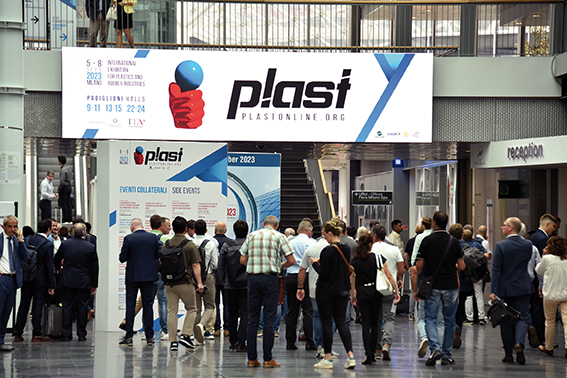
June 11 will be particularly rich in events. In the morning, from 10:00 AM to 12:30 PM, the focus will be on “Mechanical recycling of plastics – Report 2025. Protecting to regenerate the system”, organized with ASSORIMAP. Now in its fifth edition, this annual event will present updated 2025 data on the national production of post-consumer secondary raw materials, also exploring regulatory issues and traceability guarantees, which are essential to protect the mechanical recycling sector.
In the afternoon of the same day, from 2:30 PM to 4:00 PM, the focus will shift to innovation with a meeting dedicated to artificial intelligence, servitization, that is when a company no longer simply sells a product but offers a bundle of ongoing services alongside it, and digitalization, organized in collaboration with Made Competence Center. The focus will be on industrial innovation, analyzed primarily from the perspective of machine users, highlighting the opportunities offered by new technologies.
There will also be further in-depth sessions on sustainability, circularity, and ecodesign.