




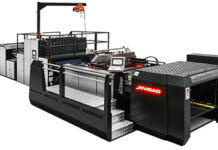


Thanks to Packz, Cloudflow, and Velvet screening by Hybrid Software, Roflex has developed a workflow focused on efficiency, colour stability, and quality for flexo printers. We discuss this in this article and video interview with Gianni Romano, owner of the Apulian prepress service provider
Roflex was founded in 1982 from an idea by Nicola Romano, who began producing flexographic printing plates for polyethylene shopping bags. It later evolved into the supply of liquid photopolymers and plates used for the corrugated board sector, which today represents its main market.
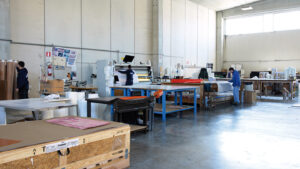
“Today the company has 13 employees and is a reference point for companies printing flexible and corrugated packaging, not only in Puglia but throughout Italy. We have chosen to work with many customers with small to medium production volumes, which allows us to ensure a solid turnover distributed across the national territory. We are very flexible and able to manage a highly different and loyal customer base”, explains Gianni Romano, who runs the company together with his brother Giuseppe. Roflex operates two production lines with traditional LAM technology and a Kodak Flexcel NX system.
Dialogue between education and industry
Roflex closely follows technical education and has developed a strong relationship with G. Marconi Technical Institute in Bari. “For us, direct contact like this is essential to support the development of up-to-date skills, bring students closer to the technologies used in the company, and contribute to the professional growth of the region. We also support PCTO programmes (Pathways for Transversal Skills and Orientation), through which high school students carry out activities in companies to gain practical skills and become familiar with the graphic industry, which is a very interesting career path with a high technological level”, says Gianni.
The open technology of Hybrid Software solutions ensures maximum operational freedom for Roflex
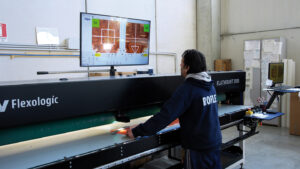
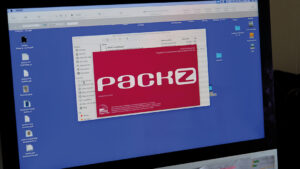
Roflex chose Packz and Cloudflow because it wanted an open and flexible workflow capable of integrating with different technologies and devices, ensuring efficiency today and freedom for future development. The partnership began in 2016, when Hybrid Software was in its early stages. The core concept is that the software is not tied to a single plate or equipment manufacturer but can drive and integrate with devices from different brands.
“And this is exactly what distinguishes Hybrid Software from other vendors, because it supports an open ecosystem, integrating with CtP systems from various manufacturers; imaging and processing equipment from different vendors; plate mounters and quality control systems. We did not want a closed system where workflow, RIP, and hardware all belong to the same supplier. Having an infrastructure based on Hybrid Software allows us to receive PDF files from clients, perform trapping, step & repeat, and quality control; generate 1-bit TIFF or imaging data; and send jobs to different plate production systems without changing the workflow”, says Gianni.
But not only this, another important aspect is the ability to customise the workflow, and to achieve this the supplier must listen to the user. This was also the case with Roflex. “I explained to Hybrid Software’s technicians the characteristics of the workflow we needed, and they listened. In fact, our Cloudflow is not standard but tailor-made for us, adapted to our needs”, Gianni explains.
Regarding this listening approach, Hybrid Software places great value on dialogue with prepress service providers, considering them active partners. “Before making concrete proposals, the technicians sought to understand our specific operational needs, adapting their solutions, flexible and customisable, to our production model and market challenges”. Gianni emphasises.
Velvet: the screen that brings softness to images and precision to printing
Roflex uses Hybrid Software’s Velvet Screening, an advanced screening technology integrated into Cloudflow that optimises highlight reproduction and improves tonal shades. Gianni explains why they chose it: “with this tool we can optimise the rendering of single graphic elements, intervening where image quality and smooth gradations make a real difference in the final print result. It is completely different from traditional AM or FM screening, because unlike fixed screening methods, Velvet screening allows us to independently control minimum dot size, resolution, and screen ruling, without being tied to a single configuration. The result is smooth gradations, invisible edge artefacts, and better reproduction of fine details, only where needed”.
Roflex therefore provides its clients with flexo plates designed to ensure more uniform output, smoother tonal transitions, and high printing performances. Its use offers flexibility, ease of use, and print perfection without compromises in quality or speed. With Velvet and Packz, the prepress service has created native, fully automated PDF prepress workflows with precise control of colour and screening.
This benefits customers significantly: with more predictable highlight behaviour and fewer print defects, press interruptions are reduced or even eliminated, saving ink, time, and substrates. “Of course, Velvet screening is plate-independent and works with all high-resolution flexographic plates and major CtP systems. It is designed for flexo printing and uses a proprietary dot-removal algorithm, delivering flawless gradients and highlight control on any plate or resolution. We currently use it mainly for plates intended for flexible packaging and label printing, improving final print quality, of packaging”. Gianni states.
Custom module for monitoring plate consumption
Roflex is developing, together with Hybrid Software and within Cloudflow, a project dedicated to monitoring the lifecycle and consumption of flexo plates. The goal is to collect useful data on plate durability, press performance, and repeatability over time. “We want to improve process control by analysing plate consumption and usage during their operational cycle. The aim is to turn collected data into useful insights to predict plate performance, optimise production specifications, and support printers in planning reprints, improving process predictability, reducing waste, and ensuring consistent quality standards over time”, Gianni explains.
In this way, Roflex will be able to support its customers not only as a plate supplier, but as a technical partner capable of supporting them in the optimisation of the entire production process.