





By Dieter Dinna – www.pack-consult.org
With Inno-Fiber, Innoform Coaching GmbH has launched a new event series dedicated to the future of fibre-based packaging. Held last April 2026, in Osnabrück, Germany, under the theme “Functional Papers for Packaging Applications”, the conference brought together material suppliers, technology providers, converters and packaging experts to explore the opportunities and challenges associated with paper-based packaging solutions. The second day of the event took place at the Felix Schoeller paper mill, providing participants with valuable insights into industrial production processes.
As the packaging industry undergoes a profound transformation, functional papers are emerging as a key innovation platform. The shift towards paper-based packaging continues to gain momentum across consumer goods markets, driven by regulatory pressure, sustainability targets and changing consumer expectations. However, despite the significant potential of barrier papers in flexible packaging applications, important challenges remain, particularly regarding recyclability and end-of-life management.
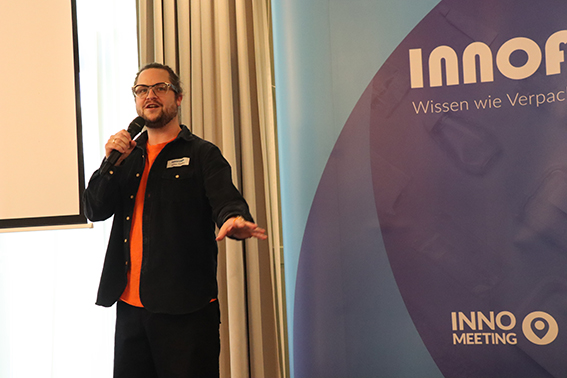
Against this backdrop of evolving regulations, market dynamics and technological innovation, Julian Thielen guided participants through a programme rich in technical content, practical case studies and lively discussion.
 Paperisation is accelerating, but the transition remains complex
In the opening presentation, Matthias Giebel (Berndt+Partner Consultants) examined the growing role of paper in flexible packaging. He explained how European legislation, including the Green Deal and the Packaging and Packaging Waste Regulation (PPWR), is increasingly driving the transition towards fibre-based solutions, while voluntary industry initiatives alone have often proven insufficient.
Thanks to continuous improvements in barrier performance, paper is becoming a credible alternative in a growing number of packaging applications. Nevertheless, challenges related to recycling systems, collection infrastructure and material performance still need to be addressed. At the same time, shortages of recycled plastics and ongoing economic uncertainty are creating additional pressure across the packaging value chain.
His conclusion was clear: the shift towards paper-based packaging will continue to accelerate towards 2030, provided that key trade-offs—such as barrier performance versus recyclability—can be effectively resolved.
Eleonore Eisath (M.I.L.K. GmbH) explored how the growing interest in fibre-based packaging is influenced not only by regulation but also by consumer perception. While paper is often viewed as the more sustainable choice, environmental benefits are not always straightforward. Consumers frequently make purchasing decisions based on convenience, functionality and price rather than sustainability criteria alone.
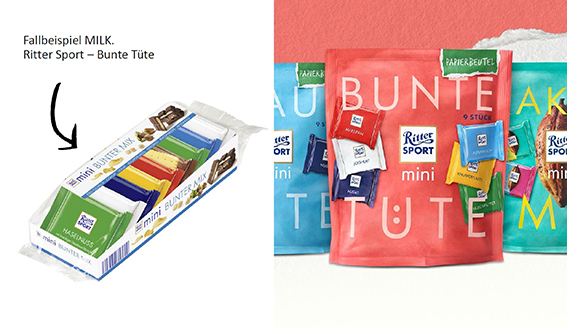
As a result, brands are increasingly challenged to balance recycling requirements, technical feasibility and attractive packaging design. According to Eisath, successful solutions are likely to emerge through gradual improvements, supported by familiar design language and transparent communication. Her conclusion: paper should only be used where it is functionally justified and genuinely credible.
Recycling challenges and contamination concerns
A central theme throughout the conference was the growing complexity of paper recycling streams.
Dr. Arne Krolle (PROPAKMA GmbH) addressed the regulatory and operational challenges created by paper-based composite packaging within wastepaper recycling systems. The increasing presence of contaminants—including barrier materials, bio-based plastics, waxes and food residues—is placing existing recycling processes under considerable pressure and complicating both paper production and converting operations.
He called for clearer definitions of contamination levels, harmonised testing methods for substances such as PFAS and microbial loads, and practical implementation guidelines for PPWR requirements. Industry associations, research institutes and technical committees are currently working to establish common Design for Recycling principles, suitable testing methodologies and clear threshold values.
According to Krolle, achieving greater alignment between recyclability, product safety and process stability will require coordinated action throughout the entire paper value chain.
The evolution of barrier papers
Several presentations focused on advances in barrier technologies for paper packaging.
Dr. Tiemo Arndt (Reflex GmbH & Co. KG) introduced packaging solutions based on densified transparent papers, positioning them as high-performance barrier materials for food packaging applications. Completely plastic-free and uncoated, these papers offer effective protection against oxygen, aromas, mineral oils and fats while maintaining excellent recyclability and biodegradability.
Their performance can be further enhanced through targeted modifications, particularly regarding water vapour resistance and heat-sealing properties, making them an increasingly attractive alternative to conventional plastic packaging.
Alexander Schroeder (Sappi Alfeld GmbH) examined the broader sustainability implications of barrier paper development. He stressed that sustainability cannot be measured solely through recyclability; factors such as resource consumption, CO₂ emissions, energy use, water demand and land use must also be considered.
Using practical examples, he demonstrated that higher recyclability does not automatically translate into a better overall environmental footprint, particularly when increased packaging weight results in greater resource consumption. His conclusion was that truly sustainable packaging solutions require a holistic approach based on the principles of “Remove, Reduce, Reuse and Recycle.”
He also advocated for greater consistency in how functional paper manufacturers communicate sustainability claims, helping to build confidence throughout the market.
Dr. Flore Mees (Siegwerk Druckfarben AG & Co. KGaA) presented the company’s CIRKIT barrier coating technology, designed to replace complex multi-material structures with recyclable paper-based alternatives.
She highlighted the importance of understanding the interaction between coating formulation, paper substrate and application process. Test results demonstrated that barrier performance depends on multiple factors and must be tailored to the specific product requirements and desired shelf life. Close collaboration across the value chain remains essential for successful implementation.
Coating technologies and new fibre resources
Christian Werner (Kroenert GmbH & Co. KG) presented advanced coating technologies capable of delivering high functionality with minimal coating weights. Barrier properties can include resistance to grease, oils, moisture, oxygen, chemicals and UV radiation.
Technologies such as anilox coating and curtain coating enable highly customised solutions based on ultra-thin functional polymers or inorganic barrier layers. At Kroenert’s Technology Centre, companies can evaluate a wide range of coating processes and development options. Closed-loop process control helps optimise coating weights while reducing energy consumption, and innovative concepts such as simultaneous double-sided coating can significantly lower both operating costs and CO₂ emissions.
Robin Huesmann (LEIPA Georg Leinfelder GmbH) demonstrated how paper-based composites can contribute to sustainable packaging solutions when applications are carefully selected and designed according to circular economy principles.
Key success factors include sustainable raw materials, reduced material complexity, Design for Recycling principles and the elimination of contaminants. Looking ahead, recovering plastics from recycling rejects through wet or dry mechanical processes could also improve the PPWR compliance of paper-polyolefin composites, although such technologies are still under development.
Overall, Huesmann concluded that paper can economically replace plastic in well-defined applications, provided those applications are carefully engineered from the outset.
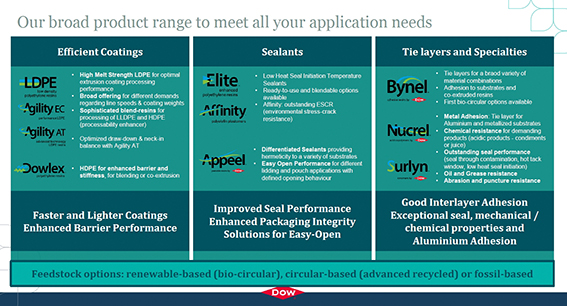
Anna Helgert (Dow) explored paper-based composites within the context of PPWR compliance and circular packaging design. Her presentation focused on Design for Recycling strategies, recycled content targets and technical solutions for demanding barrier applications. She presented industrially proven technologies based on Dow’s extrusion coating and dispersion coating portfolio, capable of improving barrier performance, sealability and processability. Dow Pack Studios™ provide development support ranging from laboratory trials to full-scale industrial implementation, helping customers develop recyclable packaging solutions that meet both performance and regulatory requirements.
Andreas Bergmeier (Felix Schoeller) compared multi-layer curtain coating and multi-layer extrusion coating technologies for fibre-based flexible packaging. Both approaches can deliver high barriers against oxygen, grease and mineral oils while maintaining a high paper content.
Extrusion coating offers excellent sealing properties, crease resistance and low coating weights, while curtain coating excels through ultra-thin homogeneous layers and high production speeds. Depending on the application, both technologies provide forward-looking solutions with distinct advantages and limitations.
From material development to machine performance
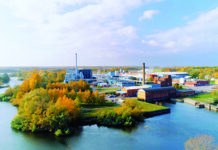
The second day of the event was hosted by Felix Schoeller in Osnabrück. Welcoming participants, Guido Hofmeyer highlighted the company’s long-standing expertise in speciality papers and its growing commitment to packaging applications. The factory tour provided valuable insights into production technologies and industrial-scale manufacturing processes.
Johannes Werthan (tesa SE) presented recyclable splicing tape solutions designed specifically for functionally coated papers. These products combine paper backings with water-soluble acrylic adhesives and are engineered to maintain process stability while supporting recyclability.
Current developments focus on paper-based alternatives capable of reducing CO₂ emissions while maintaining strong adhesion, excellent shear resistance and compatibility with coated and uncoated paper grades.
Dr. Henry Drut (FormerFab® GmbH) discussed the challenges of processing paper webs on packaging machinery. Conventional forming shoulders developed for plastic films often lead to web breaks, creasing and sealing issues when used with paper materials.
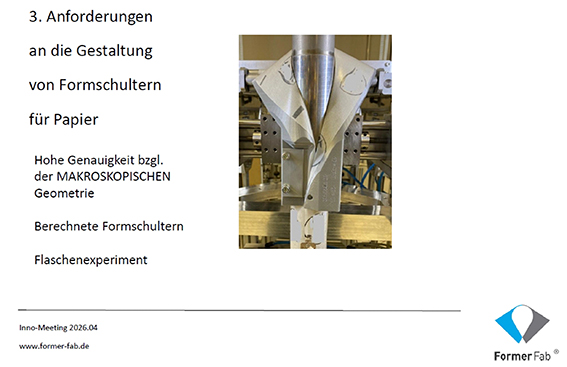
Because paper behaves differently from plastic—being stiffer, less elastic and more sensitive to tearing—forming systems must be specifically engineered for each application. Optimised geometries, controlled material paths and low-friction surfaces are all essential to achieving stable machine performance.
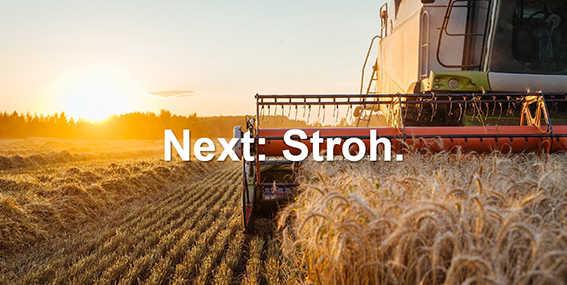
Thomas Strieder (OutNature GmbH) introduced straw as a next-generation fibre source for paper and packaging production. With demand for paper packaging expected to increase significantly over the coming decades, agricultural by-products such as straw offer an attractive and scalable alternative raw material.
LEIPA plans to produce approximately 35,000 tonnes of paper annually containing 20% straw fibre from 2027 onwards, demonstrating growing industrial interest in alternative fibre sources.
Dr. Anina Leipold (ROVEMA GmbH) focused on the processing of paper on vertical form-fill-seal machines. Key challenges include forming shoulder design, sealing performance and material handling.
She showed how servo-assisted folding systems, optimised sealing geometries and carefully adjusted machine settings can support the production of gas-tight paper bags. Success ultimately depends on matching machine geometry to the specific characteristics of each paper grade.
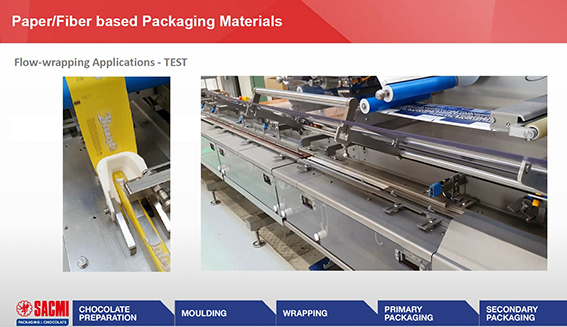
Herbert Hahnenkamp (SACMI Packaging & Chocolate Swiss SA) presented the company’s experience in converting fibre-based packaging materials. He emphasised the importance of a structured development process—from material analysis through industrial validation—to ensure machine compatibility, production efficiency and packaging quality.
Stable production can be achieved through extensive testing, customised machine components and clearly defined quality standards.
EPR fees and regulation continue to drive change
Dominik Lichtenthäler (Interzero Circular Solutions Germany GmbH) analysed Extended Producer Responsibility (EPR) fee structures across Europe and their impact on packaging design decisions.
In many countries, including Belgium, Austria and Spain, EPR fees for paper packaging are significantly lower than those applied to plastics or composite materials, creating a strong incentive for paper-based solutions. Several markets have already introduced eco-modulation schemes that reward packaging designed for recyclability.
However, national classification rules still vary considerably. Fibre-content thresholds differ from country to country, and the use of coatings can sometimes result in packaging being classified as a composite material, substantially increasing compliance costs.
A new platform supporting industry transformation
In his closing remarks, Julian Thielen summarised the key messages emerging from the two-day event. Inno-Fiber clearly demonstrated the growing importance of functional packaging papers as a viable pathway towards more sustainable packaging solutions.
Combining technical expertise, practical case studies and direct dialogue across the value chain, the conference successfully delivered a platform for knowledge exchange and innovation. With its inaugural edition, Innoform Coaching GmbH has established a new industry forum that is set to support the ongoing transformation of the packaging sector and become a regular fixture on the packaging industry’s calendar.