



Competitiveness is not only about production, but also about the management of commercial and technical activities. From this perspective, the collaboration with B+B International has grown, along with the introduction of Packway Pre-Production with the Docupoint module.
Dalla tradizione familiare alla crescita industriale e manageriale
Founded nearly 70 years ago by Adriano Ceriana, the company experienced its true industrial development starting in the 1980s, with the entry of Barichello family and the launch of structural investments in machinery and organization.
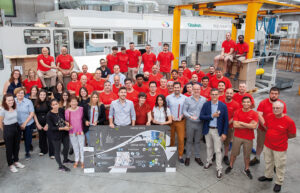
Today, Scatolificio Ceriana represents one of the leading companies in the Verona packaging sector. With a total of 90 employees, the company closed 2025 with a turnover of €18 million and a production of over 19 million square meters of converted cardboard. Over the years, the focus has remained clear: customer service and product quality, both from a technical-mechanical and a graphical standpoint. Growth built on word of mouth, strong relationships, and a reputation consolidated over time.
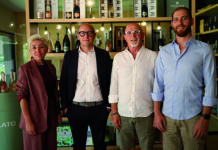
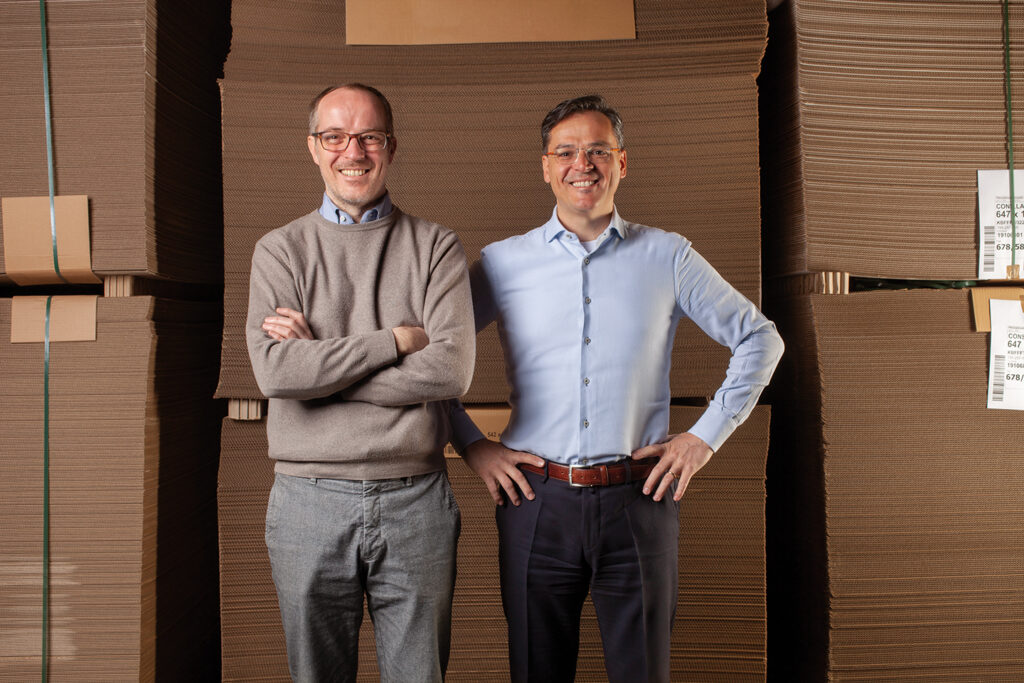
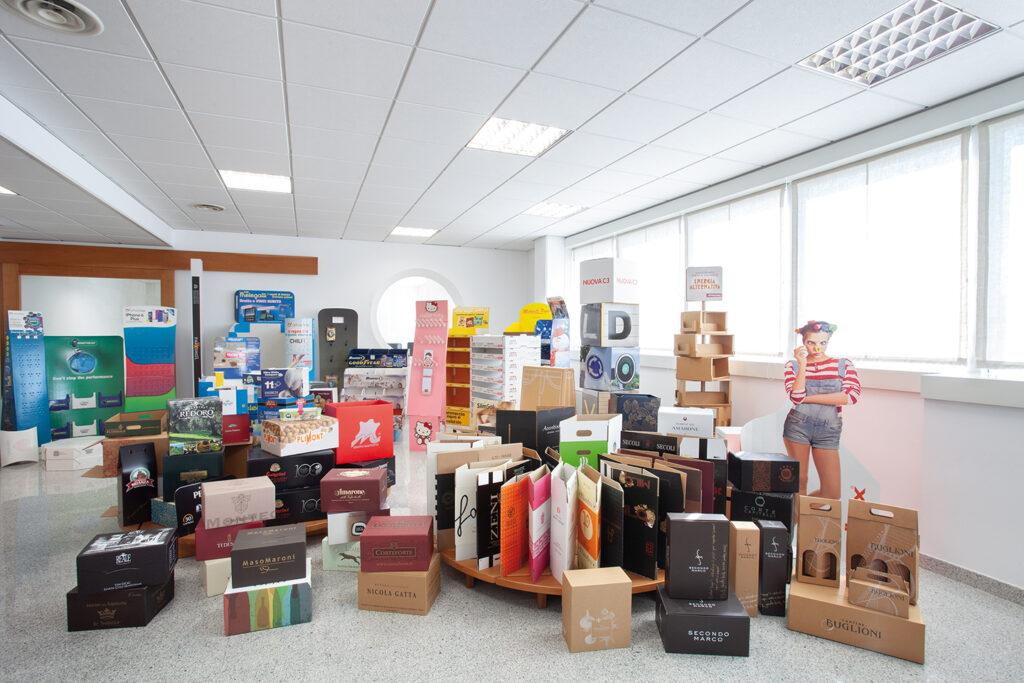
From a small box-making machine to a solid and constantly expanding company, which has made quality, research, and environmental responsibility its key strengths. Today, the company operates across several sectors: food, industry, pharmaceuticals, automotive, and others. In terms of products, the mix includes standard slotted containers, die-cut boxes, trays, and displays. In nearly seventy years of history, the company has achieved steady growth and is now led by a second generation. At the helm today are Giovanni and Marco Barichello, key figures in a journey of evolution that has combined family tradition, managerial expertise, and digital transformation.
Modern packaging, an increasingly selective market
Packaging is a sector closely tied to overall economic trends. When the market slows down, box production slows down as well. When it picks up again, competition becomes more aggressive. Today, it is not enough to simply be present, companies need to be well-structured to survive. Clients expect fast and accurate quotations, timely samples, technically correct information at the first attempt, project traceability, and long-term reliability. In this context, management based on memory or fragmented verbal information handled through empirical systems is no longer sustainable. Clients increasingly demand high-level technical and commercial support, innovative projects, fast and functional solutions at competitive prices.
For many years, we have been using ArtiosCAD software for structural design and a Kongsberg plotter for sample-making. More recently, we have also implemented prepress software technologies and systems to automate approval workflows. Another significant change concerns the commercial structure. Ceriana is progressively supporting and partially replacing multi-mandate agents with in-house sales managers, integrated with the technical department and led by a sales director. With the right tools, their work has also improved in terms of quality, timing, and revenue generation. All these technologies and organizational changes have found in Docupoint the perfect orchestration tool.
A distinctive value: not just boxes, but performance
“In itself”, explains Barichello, “we make products that others also make. The difference lies in how we make them and the services connected to them”. A concrete example is the machinability of packaging. For clients with automated production lines, the reliability of the box becomes a strategic factor. A box that doesn’t jam prevents line stoppages, which can be far more costly than the price of the packaging itself. Equally important is consistent quality in printing. Maintaining perfect color uniformity over time is a value recognized and appreciated by the market. In a sector like packaging, where competition is increasingly intense and clients demand speed, precision, and absolute reliability, simply “making good boxes” is not enough. It requires process control, proper data management, and close collaboration between commercial and technical teams.
It is precisely within this context that Scatolificio Ceriana has built its path of evolution, combining family tradition and production quality with strong investments in organization and digital transformation, implementing Packway Pre-Production along with the Docupoint module for CRM, Technical Office Management, and Quality Management.
Digital transformation, technology, and method must move together, starting from data
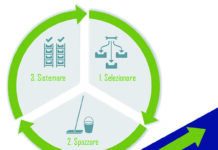
In 2020, Ceriana embarked on a lean journey that marked a turning point. After an initial adjustment phase, it became clear that achieving structural results required a dedicated internal role. The appointment of an Operations Manager marked the beginning of a concrete organizational leap. Lean principles started in production but gradually extended across the entire company, involving the commercial department, the technical office, and administration. The goal was to eliminate waste and make processes smoother, controllable, and measurable.
Within this journey arose the need to better structure commercial and technical management through a CRM fully integrated with the technical office’s production processes, encompassing structural CAD design, plotter sample-making, the initial approval phase, graphic creation, graphic industrialization, graphic approval, palletization, raw material performance studies, and cost estimation. Following order receipt, it also includes industrialization and coordination with suppliers of printing and die-cutting equipment.
“Competitiveness today does not depend solely on production”, explains Giovanni Barichello. “It requires commercial teams capable of listening to client’s real needs, gathering and sharing specific requirements, and transforming them into value propositions through collaboration between our commercial and technical departments”.
It was from this need that the decision was made to implement Packway Pre-Production with the Docupoint module, the web platform developed by B+B International and specifically designed to meet the needs of packaging manufacturers.
Pre-Production activity planner
After an initial attempt to implement a traditional CRM, which unfortunately was unsuccessful, we gained experience and reinforced the awareness that the software must necessarily manage both the commercial and technical office processes. Therefore, it must be industry-specific, and its users must have a deep understanding of our sector.
The choice of Docupoint proved strategic for two main reasons, the specialization of both the software and the provider:
1 – Structured collection of commercial and technical information – No longer relying on data stored in the heads of individual agents or technicians, information becomes a shared, accessible asset that allows us to map who the client is, understand their needs, and determine the appropriate proposals.
2 – Integration with the company management software – With a single click, it is possible to have a complete view of the project: contacts, volumes, production history, and technical specifications. This reduces response times, errors, and information loss caused by repeated phone calls, emails, or messages. Data is entered only once into software designed specifically for packaging, with data, modules, and logic tailored to our sector.
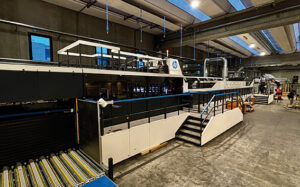
The core of this management process is evident in the Pre-Production Planner, a true scheduler capable of planning the activities of all involved resources through precise and punctual time management. The introduction of the system was less a technical challenge than a cultural one. Training salespeople and collaborators to enter data systematically required a shift in mindset. Today, however, the benefits are clear: projects aligned with expectations, timely samples, faster and more accurate quotations, and greater control over workloads. “The IT system is the nervous system of the company”, says Barichello. “It’s not enough on its own, but without it, you cannot grow in a structured way”.
True competitiveness comes from integration
Another key aspect that emerged from Ceriana’s experience is that software alone is not enough. Docupoint performed very well, and its implementation was fast because it was integrated into an already ongoing lean reorganization process. Method and technology worked together. The result? Greater control over commercial opportunities, and the ability to analyze not only how many orders come in, but how many projects are in production and what economic value they represent. All of this translates into better direction for the sales force.
Another important point is the shared information assets, no longer tied to individual people, which gives significant value to the work of all the resources involved, especially the technical office team. In a context of staff turnover or organizational growth, this becomes an element of stability and strategic continuity.
Another key element is the integration between Docupoint and our company’s ERP system. This has allowed us to introduce an industrial system we needed, without disrupting our current software architecture. From this perspective of complementarity rather than replacement, Docupoint software and B+B’s technical expertise have made the difference.
Thanks to this integration, anyone responsible for preparing a quotation can quickly access all relevant information stored in the ERP, such as customer history, ongoing orders, quotes, non-conformities, financial data, negotiation status, etc.
The result is a more efficient information flow that enables:
- improved collaboration between sales departments and the technical office;
- faster response times to customers;
- elimination of redundant information exchanges;
- reduction of errors and misunderstandings; better control of workloads.
Why does Docupoint make a difference in the packaging industry?
Many companies have tried to introduce generic CRM systems without success. The reasons are essentially two: lack of integration with the technical office and lack of specific industry knowledge on the part of the software provider. The collaboration with B+B International, on the other hand, has enabled Ceriana to work with a partner that understands the processes, language, and dynamics of the packaging sector. B+B’s uniqueness is expressed through its deep knowledge of technical office operations, as a provider of leading CAD/CAM technologies in the industry such as ArtiosCAD and Kongsberg, combined with the software development expertise behind the Packway ERP system.
This has reduced implementation time, misunderstandings, and the need for complex customizations, resulting in a solution that is already up and running. Finally, the high level of customization of Docupoint’s templates, tailored like a bespoke suit to the specific needs of our company, has made the real difference. For Ceriana, Docupoint now represents one of the strategic levers to support growth and face the market with greater awareness and solidity.
In modern packaging, the difference is not only what you produce, but how you manage the entire flow leading to production. Those who manage information better, manage the market better and build a solid foundation for tomorrow’s competitiveness.
Looking to the future with the right tools
In the short term, Scatolificio Ceriana aims to consolidate its growth while maintaining a balanced approach to investments. In the medium term, the company has already acquired land adjacent to its current headquarters, with a view to a potential expansion of its production capacity.
Ceriana’s experience shows how tools specifically designed for the industry, such as Docupoint, can support packaging companies in transforming information management into a real competitive advantage.