




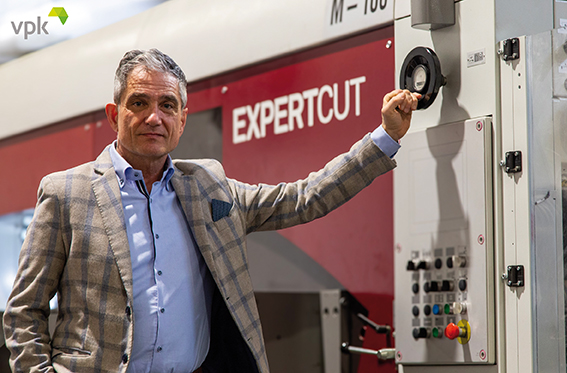
Just over a year after Open Imballaggi joined the VPK Group — a strategic milestone not only for the Bergamo-based company but also for strengthening the Group’s presence in Italy—we visited CEO Cristiano Pessina at the Calcinate (BG) headquarters to learn more about future goals and strategies.
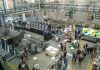
Open Imballaggi is a long-established manufacturing company in the corrugated cardboard sector, founded in the 1950s–60s by the Marsetti family, who developed it into a reference point within the Bergamo region. The current site in Calcinate (BG), built around twenty years ago and expanded through successive phases, now serves as the company’s production hub: approximately 30,000 m² of covered area on a total lot of 50,000 m², with additional expansion already planned. This last aspect was also a decisive factor in VPK’s acquisition.
Open Imballaggi made headlines a couple of years ago thanks to the acquisition by the Belgian VPK Group, initiated at the end of 2024 and completed in 2025. The operation stemmed from a convergence of factors: on one side, the lack of generational turnover within the founding family; on the other, the desire to integrate Open Imballaggi into a broader, more structured industrial context.
VPK Group is an integrated international paper-based packaging group with 70 production sites spread across 21 countries, generating €2 billion in revenue and employing over 7,000 people. Governance remains firmly in the hands of the local management, which keeps a direct and hands-on approach despite the complexity of the organizational structure.
“It’s not simply about joining a bigger group, but about adopting a precise industrial model made up of processes, standards, and shared objectives. This has brought significant changes, both organizationally and culturally,” begins Cristiano Pessina, who was selected by VPK to lead Open Imballaggi’s plant as CEO, retaining the company’s original trading name as a sign of continuity.
Integration and synergies: a more complete value chain
The acquisition of Open Imballaggi is part of VPK’s broader strategy of vertical integration in Italy, which also involves other entities such as Zetacarton and IEMME. The objective is clear: progressively close the value chain, from paper production to finished product. This model reduces market dependency, ensures production continuity, and increases control over quality and costs.
“Integration also means protection,” Pessina emphasizes. “If you control raw materials and key production steps, you drastically reduce risks tied to market volatility or supplier issues.”
A site with strong growth potential to better serve core markets
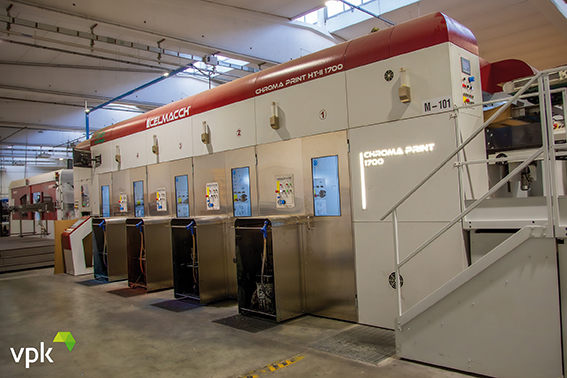
Open Imballaggi currently employs around 65 people and operates on a single shift, but the goal is to move to two shifts in the near future. New investments are already planned, in line with similar initiatives across the group, including next-generation machinery and a potential doubling of production capacity.
The geographic location, in the heart of Lombardy, is another strong point: about 70% of the Italian corrugated cardboard market—estimated at over 8 billion square meters—is concentrated here.
The company primarily serves the food & beverage and manufacturing sectors, with a fairly balanced distribution. Alongside traditional segments, new opportunities are emerging, such as the fruit and vegetable market, where Open Imballaggi has recently entered.
The product portfolio includes both standard items and customized solutions, with particular attention to logistics and packaging needs. In some cases, production is supported by a network of assembly centers across the territory to ensure efficient delivery of finished products.
Quality and technology: the real competitive advantage
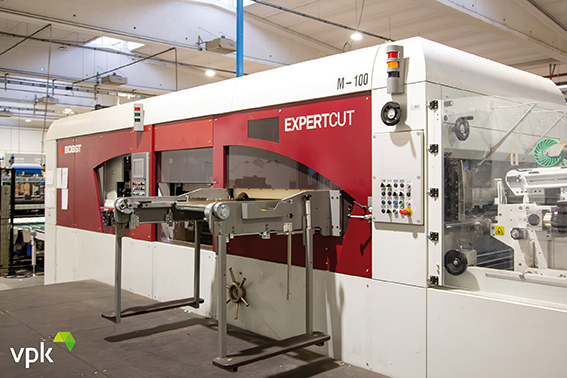
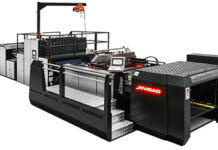
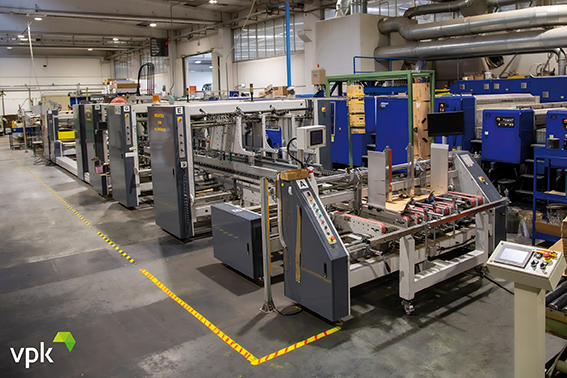
One of Open Imballaggi’s defining traits is its focus on high-quality production. This choice translates into continuous investments in technology and expertise. The machinery portfolio includes systems from leading market players such as Bobst and Emba, while production increasingly relies on automation, precision, and repeatability.
“Today packaging is no longer just a container,” Pessina notes, “but a functional component of the customer’s entire production chain. Tolerances are increasingly tight, and packaging lines operate at extremely high speeds: packaging must be flawless.”
At the same time, graphic quality is becoming more important, with high-definition printing and greater attention to visual impact, while maintaining compatibility with recycling requirements.
Digitalization, new production models, and sustainability as strategic pillars
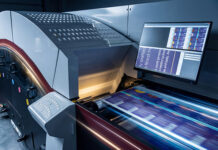
Alongside traditional manufacturing, the Group has also introduced single-pass digital printing technologies, used for specific applications or to respond to customization needs or small production batches.
Another area of development is fanfold, which enables flexible, integrated logistics solutions and allows customers to produce boxes on demand.
Sustainability plays a central role in VPK’s strategy. The Group has earned major international certifications and is known for its particularly low environmental footprint. Key initiatives include self-production of energy through various systems and continuous efforts to reduce CO₂ emissions along the entire value chain.
“It’s not just a response to market demands,” Pessina highlights, “but an internal value. We want our products to have the lowest possible environmental impact from start to finish.”
A Market in transformation
The corrugated cardboard sector is undergoing profound change. After the demand peak during the Covid period, the market has gradually stabilized, while production capacity has increased due to recent investments. The result is a more competitive environment where differentiation through quality, service, and integration is essential.
“It’s not a market in crisis,” Pessina notes, “but definitely a more selective one. Large groups will continue to grow, while smaller companies will need to find specialized niches by focusing on flexibility and service.”
VPK’s expansion in Italy will not stop here. Following the acquisitions of Zetacarton, IEMME, and Open Imballaggi, the Group will continue evaluating further opportunities, consistent with its long-standing growth strategy, which has increased turnover from a few tens of millions in the 1990s to around €2 billion today.
For Open Imballaggi, this marks a new phase characterized by investment, integration, and development—an industrial challenge that, as Pessina stresses, “is not only about increasing volumes, but building a long-term value-generating model.”