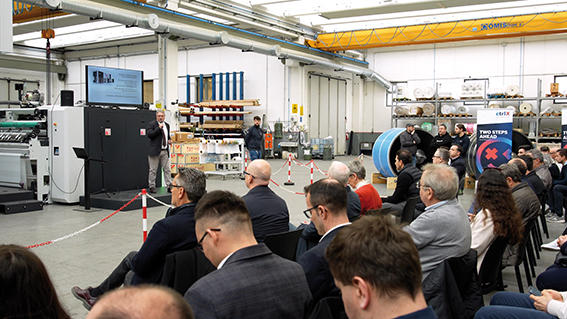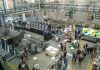



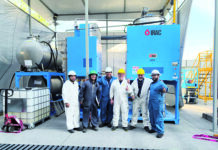
Expert opened the doors of its factory in San Martino Buon Albergo (Verona) on March 18 and 19 for a two-day demo event that allowed customers and industry professionals to see firsthand technological solutions capable of combining print quality, sustainability, and production efficiency. We also discuss this in the video feature with Luigi Fiorenzato Sales & Marketing Manager of Expert
The company has successfully carved out its own space in the market by consistently offering highly innovative technological solutions that define its distinctive identity. We are talking about Expert, a small but dynamic and flexible manufacturer of flexographic printing presses, which, beyond its technological focus, has been able to provide increasingly comprehensive service to its customers, anticipating production needs and sometimes even regulatory requirements.
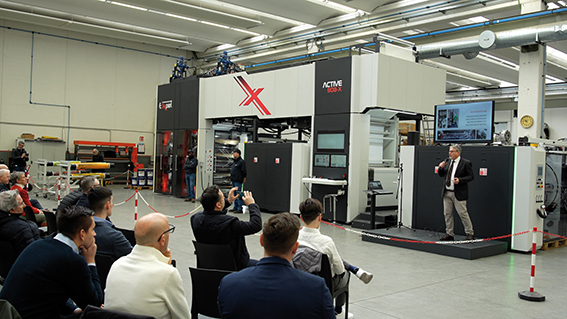
Last March, in collaboration with Huber Group, the doors of Expert in the province of Verona were opened for a successful event, structured into morning and afternoon demonstration sessions. Each session was preceded by a presentation of the company and the technologies developed, with particular attention to the Zer0Waste system, a central element of Expert’s philosophy focused on waste reduction and process optimization.
The star of the demonstrations was the 8-color central impression flexographic printing press ACTIVE, model 130, in the same configuration presented at Drupa 2024. The machine, designed for printing on film with solvent-based inks but also configurable for paper substrates, integrates the IPQ Check quality control system and the Zer0Waste system, enabling complete control of the production process.
Stochastic screening and high-definition plates: quality comparable to gravure
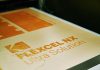
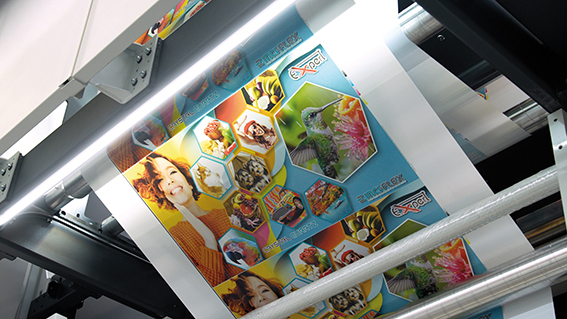
One of the most significant aspects that emerged during the demonstrations was the print quality achieved thanks to the use of high-definition plates with stochastic screenings of 80 and 100 lines/cm, calibrated in combination with specifically optimized ink formulations. The tests showed extremely high-level results, with visual output characterized by dot uniformity, smooth tonal transitions, and color stability. The adoption of stochastic screening eliminated moiré effects and made it possible to achieve quality comparable to gravure printing. This evolution represents a key step in positioning flexo technology in premium segments, where graphic quality is becoming increasingly decisive.
Zer0Waste: three production start-ups with zero waste in less than twenty minutes
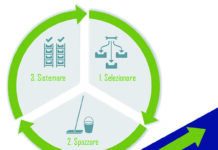
The central moment of the event was the operational demonstration of the Zer0Waste system, designed to eliminate waste during start-up and job changeover phases. During the tests, three complete production start-ups were carried out in less than twenty minutes overall, about twelve minutes in the fastest demonstration, without generating any material waste. The transition from one job to the next took place with minimal separation space, between 2 and 4 meters, thanks to synchronized management of the color units and advanced control of printing parameters.
The demonstration clearly showed how it is possible to eliminate start-up waste, drastically reduce setup times, and improve the overall productivity of the press, with direct benefits both economically and environmentally.
Energy efficiency and consumption reduction: measurable sustainability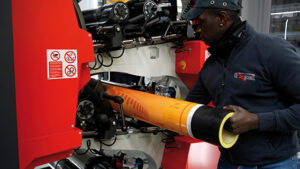
The Zer0Waste system fits into a broader vision of sustainable production, which includes concrete measures to improve energy efficiency and optimize consumption.
Among the solutions presented:
- a new high-retention dryer with a highly efficient energy recirculation system, capable of significantly reducing energy consumption;
- the use of motorized unwinders capable of generating energy during operation, which is fed back into the machine’s energy bus;
- reduced solvent consumption during washing cycles;
- a predictive system for managing Pantone inks, capable of calculating consumption in real time and optimizing quantities used.
These solutions demonstrate how energy efficiency and waste reduction can be addressed systemically by acting on the entire production process.
Nitrocellulose-free inks and PPWR: towards real recyclability of flexible packaging
With the PPWR regulations coming into force on August 12, 2026, attention is shifting toward elements that have historically received less focus, including printing inks. Nitrocellulose (NC), historically the most widely used binder in inks for flexible packaging, is now under increasing scrutiny. Although still permitted within specific limits, NC presents critical issues in mechanical recycling processes, including color degradation, odor formation, and the release of volatile degradation products at extrusion temperatures. These effects can compromise the quality of recycled material and reduce the suitability of recycled polymers for high-value applications.
For this reason, the transition to nitrocellulose-free ink systems represents a key step toward achieving true packaging circularity. By replacing NC binders with alternative technologies, particularly polyurethane-based systems, it is possible to combine high printing performance with improved compatibility in mechanical recycling streams. The goal is clear: to remove one of the last obstacles preventing flexible packaging from achieving full recyclability.
Hubergroup Print Solutions specialists are addressing this transition by offering a range of complementary alternatives, based on the understanding that there is no single solution for sustainable packaging in a context characterized by widely varying applications, substrates, and regulatory requirements. At the core of this strategy is the newly developed polyurethane-based Gecko series, designed for lamination and surface printing with or without overprint varnish, as well as the water-based Hydro X range, an ecological and fully recyclable alternative to solvent-based printing. In addition, Hubergroup offers a service to calculate the resulting NC content based on the combination of inks used, in order to assess compliance with the new D4R criteria. Each approach enables converters and brand owners to improve recyclability while maintaining the high performance required by modern packaging.
An increasingly competitive and sustainable flexography
The Expert open house confirmed that flexography is undergoing a phase of profound technological evolution, marked by significant improvements in print quality, increasing attention to sustainability, and strong optimization of production efficiency. The ability to achieve quality comparable to gravure, eliminate start-up waste, and use more sustainable ink formulations represents a tangible shift for the entire industry.
The demonstrations held in San Martino Buon Albergo showed that these innovations are no longer prototypes or experimental developments, but already mature solutions applicable to industrial production, confirming flexography’s role as an increasingly central technology in the future of flexible packaging.