








Following the publication of the article on “Mentorcoaching” in Converter & Cartotecnica (September–October issue), we now delve deeper into Nexpack, a company specializing in management consulting for the packaging industry, to better understand who are the “Consulnauts” and to gain insight into the needs of businesses in this sector.
In a constantly evolving world, Nexpack, an advisor specialized in management consulting for the packaging sector, introduces a new professional profile: the Consulnaut©. Not a traditional consultant who simply applies his expertise or offers ready-made solutions, but rather a new way of approaching companies and sharing an entrepreneurial mindset.

Dr. Pagliarini, how does the Nexpack Consulnaut© differ from a traditional consultant, and could you highlight some organizational focus areas useful for raising awareness among companies in the sector?
“The Consulnaut© explores the corporate cosmos like an argonaut, embarking on a shared journey of discovery and growth alongside the client. They connect people, technologies, and meanings organically, navigating uncertainty, building learning and operational pathways, and acting as a catalyst through a humanistic and systemic approach. The consultant provides answers to known problems and focuses on short-term results, whereas the Nexpack Consulnaut©, with deep knowledge of the sector, explores new possibilities through a highly customized approach, working with the company to share medium- to long-term visions. In short: while a consultant fulfills an assignment, the Consulnaut© evolves through vision. Our team will share a few examples, short informational insights on topics such as organizational and resource improvement, compliance, and best work practices, essential pillars for a high-performance journey where, for instance, sustainability and IT security are no longer optional, but rather strategic assets and  development opportunities. An important source of value recovery and a key component of competitive advantage on which we focus lies in the area of intangible assets and in identifying the hidden costs caused by inefficiencies related to human capital. In fact, it has been shown that the organization of office departments often has greater potential for improvement than the factory floor. The latter, relying on new technologies and stricter protocols, allows systems, once correctly set within processes, to operate efficiently, with narrower margins of error compared to human capital working in office environments.”
Three areas that may seem distant, but are closely interconnected: organization, business continuity, and cybersecurity
What is your approach to an organizational improvement project?
“Our approach, whether it involves governance, operations, management control, or commercial areas, begins with a preliminary check that leads to the presentation of a project and its defined scope of intervention. It starts with an analysis of the processes that need attention and continues, and this is one of our key trademarks, with an evaluation of the human resources involved (through concise reports) and, when necessary, of the technological tools in use (such as software, AI, etc.). From there, we develop improvement solutions; in fact, for certain projects, part of our compensation is tied to the achievement of specific objectives, another one of our distinctive trademarks.
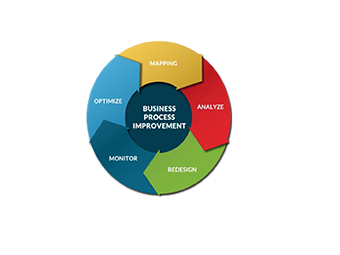
Organization is a “very serious matter”; all the benefits emerge when organizations make become process improvement, or BPI (Business Process Improvement), a significant and integral part of their corporate culture”. “Our work is entirely tailor-made. In practice, even though the types of issues we encounter in companies are often similar, and we always use our SBG© methodology, the application of organizational improvement protocols is always contextualized”. (Dr. Francesco Pagliarini, CEO – Nexpack)

“Operational continuity, not just IT, is an essential requirement for companies in the corrugated cardboard sector, both for those operating in continuous cycles and for all others. What would be your advice to ensure they are prepared for any possible disruption?”
“For business continuity, an organizational and time-based planning aligned with the ISO 22301 standard can effectively face any interruptions in operations caused by internal or external events. It is also useful to implement periodic 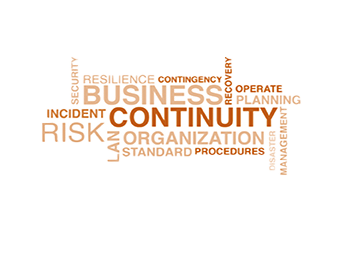 testing plans for continuity procedures, through simulations (e.g., machine downtime, plant blackouts, unavailability of critical suppliers, etc.). This allows the company to verify the effectiveness of the measures in place, train personnel, and enhance its overall resilience”. (Eng. Andrea Aulisi, Project Manager – Nexpack)

What should companies do in terms of Compliance and Cybersecurity to protect themselves from the risks of cyber attacks?
“We recommend correctly complying with the rules of the EU GDPR 679/16 and the AI Act, but not through online templates. Then, it’s important to adopt IT security solutions tailored to the company’s specific needs, for example by implementing procedures inspired by the EU NIS 2 Directive, regardless of whether they are legally mandatory or not. For larger organizations, obtaining ISO 27001 certification is also advisable”. (Dr. Laura Raffo, Project Manager – Nexpack)
How marketing analysis acts as a booster for commercial strategies and ESG goals. How can qualitative surveys become an integral part of a company’s marketing strategy?

“I believe that conducting Customer Satisfaction Analyses at least every 2–3 years, (more in-depth than those required by ISO 900), allows companies not only to improve customer satisfaction levels, but also to gather insights for more effective segmentation. This means identifying differences in customer needs and analyzing multiple KPIs related to products, services, logistics, and more. In this way, a company can better refine and evolve its marketing and commercial offering, freeing it from the usual cycle of price, inventory, and payment, while also better aligning production phases”. (Dr. Sara Di Stefano, Specialist – Nexpack)
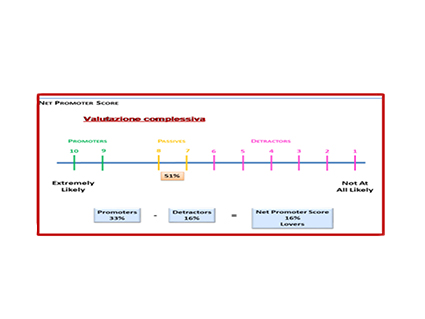
What solutions can help improve the commercial organization of companies in the corrugated cardboard sector?

“This is not just a need, it is the top priority, because the commercial area is the core of the company. In this regard, it’s useful to summarize three key areas. The first is the purely commercial aspect: the offer. Anyone who says that price no longer matters in negotiations is living in a dream world, however, its weight should be reduced, which is quite a complex task for various reasons. To achieve this, companies must focus on other drivers, such as the speed of engagement with the customer, clear and prompt communication of quotations, and the strength and quality of relationships. The second area concerns the commercial organization itself, which should be based on streamlined, functional work processes, with clearly defined roles and responsibilities, supported by available IT tools. However, even in this area, people make the real difference. That’s why the third area, related to professional skills, is not only a catalyst for the entire business but can also help compensate for temporary weaknesses in other departments that are still being aligned. As for us, we often combine commercial reorganization projects with our Mentorcoaching© methodology, designed to improve resource governance and strategic market approach”. (Dr. Francesco Pagliarini, CEO – Nexpack)
The sustainable transition is a strategic challenge for packaging companies. Is it possible to start a virtuous and achievable ESG path for every type of organization?
“Environmental sustainability defines a corporate ecosystem that multiplies social, environmental, and economic value over time. Moreover, a company that already rigorously complies with regulatory, managerial, and market obligations gains a competitive advantage that can be further developed through a dedicated ESG pathway. The Omnibus Package has reduced the obligations and the number of companies subject to sustainability reporting requirements, and it has postponed adoption timelines. However, our distinctive approach offers an opportunity: to observe, assess, and select the most suitable tools based on each company’s characteristics, following a defined yet gradual path 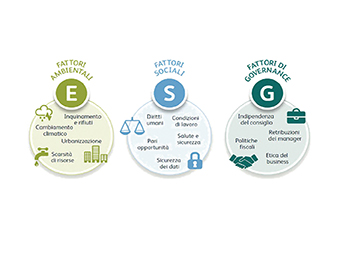 that enables businesses to capture the benefits and value-generating potential of ESG integration”. (Dr. Maurizio Catalano, Project Manager – Nexpack)
In conclusion, we can say that the Consulnauta© embodies the role of both accelerator and facilitator among departments, following a logical thread and introducing a new way of thinking and delivering consultancy. This approach is rooted in immersing oneself in a shared entrepreneurial vision, which is precisely why Nexpack is called upon to support company management, integrating its own wealth of experience and ideas to drive continuous improvement and evolution.