









What does leadership look like in the absence of stability? Sharing his lived experiences,
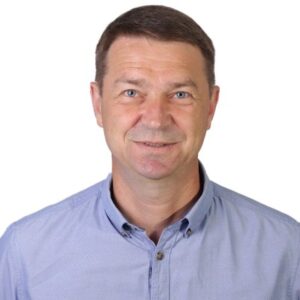
Yura Bachurin, Operational Director at Paper Kite and Editorial Board Member at Corrugated Industry Media, shares how businesses in Ukraine, like his, continue to operate in extreme conditions – and why the lessons he’s learned are relevant for industry leaders across Europe, and beyond.
For many across Europe, the war in Ukraine is followed, at a distance, through headlines and statistics. Yet, for those who are running businesses inside the country – like myself – the war is a reality that shapes the decisions we make each day, from how we manage people and production, to how we define leadership.
When I was invited to speak at the Corrugated Conference at Corrugated (one of the six co-located events at FESPA 2026), I was asked a simple question: “What is it really like to run a corrugated and packaging business in Ukraine today?”. The answer is complex, challenging and, unexpectedly, instructive for leaders everywhere.
Operations during conflict
I am the Operational Director at Paper Kite and I am responsible for management across production, certification and performance. Our business has three printing machines and three converting lines, which supply printed paper and corrugated packaging into the domestic market. Despite the circumstances, we have recently completed ISO9001 quality management system certification and continue to develop our operational capabilities. From the outside, that may sound like “business as usual”, but on the inside, every achievement is a big win.
That’s because when you run a business during wartime, there are consistent levels of uncertainty. Power outages are expected, logistics are fragile and workforce availability can change overnight. On many days, success is defined by the team arriving to work safely and production running smoothly.
Years ago, before the war, the idea of happiness meant: career progress, growth targets and long-term strategy. Today, the definition is more simple: if you are alive, your family is with you, and you have electricity, water and food – that is enough. Everything beyond that is a huge privilege.
This shift in perspective has shaped leadership across Ukraine. We recognise that the greatest, most valuable asset we have is our people. While challenges like managing technology, automation and digital transformation still matter, they are secondary.
Leadership in these conditions is handled with respect, trust and empathy because if people feel supported, seen and understood, they stay. And, in a country facing workforce migration, talent retention and protection is critical.
Working as a team, through change
In our business, we know our employees – and even their family members – by name. We also understand the mental loads they may carry into the workplace. For example, one colleague operates machinery in our business while her son is on the frontline working as a medical professional. I like to ask about her wellbeing and her son, to show support – because ultimately, we are a team.
At times, challenges arrive without warning as employees are drafted. Key individuals may disappear from teams overnight due to being drafted to military forces and this results in skills gaps, with no option for a gradual transition. This reality is not unique to the corrugated, printing or packaging industries – it affects every sector across Ukraine.
Today, many Ukrainian corrugated and packaging companies are maintaining market presence by sustaining capacity and preparing for recovery. When the war ends, companies that have preserved their teams, infrastructure and leadership integrity will be best positioned to rebuild quickly.
This leads to the deeper lesson I will share at the Corrugated Conference: leadership under extreme conditions reveals what truly matters. It tests business continuity plans and risk matrices, as well as emotional resilience and personal values.
Today, across Europe and beyond, industries are facing growing uncertainty – from geopolitical tensions and energy disruptions, to supply-chain fragility and labour shortages. The Ukrainian experience offers real, unfiltered insight into what happens when stability disappears, as well as how leaders can adapt.
My session at the Corrugated Conference will share my unique, lived operational experiences through the war, from decision-making under pressure to leading with leadership focus and empathy when conditions are extreme.

I look forward to seeing you at the event.
Yura Bachurin, will speak at the Corrugated Conference at Corrugated 2026. Learn more about the Corrugated Conference and for the full schedule, visit: https://europe.fespa.com/whats-on/conference-programme
To register to attend Corrugated, visit: www.corrugated.live