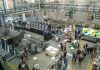



The last two Labelexpo shows, Labelexpo Europe and Labelexpo Asia 2025, now LOUPE demonstrated how core label converting technologies have been adapted to open up new opportunities in the flexible packaging and folding carton markets.
di Andy Thomas-Emans, Strategic Director at LOUPE Global, Informa Markets LOUPE Global
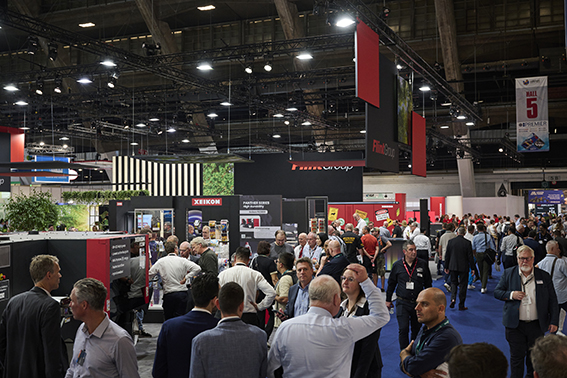
Flexible packaging has led the way. We have seen at Labelexpo in the last 12 years the building of a network of suppliers covering all aspects of flexible packaging relevant to label converters. At the last two Labelexpo Europe exhibitions, 40 percent of visitors registered an interest in flexible packaging as well as labels and pouches. Materials knowledge is a critical part of the learning journey when diversifying from labels, because the pouch, sachet or flow-wrap is now the primary product container. Ink suppliers have tailored their exhibition space to focus on flexible packaging as well as label applications. LOUPE events also host exhibitors who specialize in barrier coating technology, which is helping to make film and paper-based flexible packaging more sustainable by eliminating lamination layers.
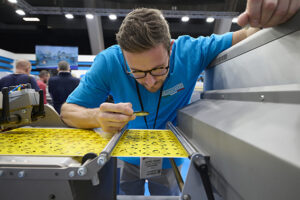
Why has flexible packaging proved such a perfect match for label converters, once the very steep learning curve has been mastered? Because buyers of flexible packaging usually deal with wide-web converters with long lead times, high minimum orders and long delivery times. Adapting core narrow and mid-web label technology – digital, flexo and hybrid – to this market harnesses the skills and agility of the label printer to deliver short lead times, rapid response, value-added inline decoration, personalization and mass customization.
Production versatiliy for folding cartons

Folding cartons will be the next package printing market to be positively disrupted by core labels technology: at the last two Labelexpo Europe shows, 25 % of visitors registered an interest in folding cartons. Industrial-scale folding carton production is overwhelmingly carried out in a multi-stage operation where offset printed sheets are moved between multiple offline processing stations. This involves long lead times, considerable work in progress and increased cost and work time for each subsequent decoration processes. Inline technology allows the production of finished folding cartons in a single pass. In principle an inline narrow/mid-web press, flexo or offset, could include any module common to a label press, including screen or inkjet bar for variable imaging or digital embellishment. For longer runs, rotary cutting and creasing dies can be used for single-pass production. ‘Near line’ digital printing with off-line finishing is another possible labels-derived workflow. We can expect that existing finishing and embellishment suppliers to develop innovative solutions here, just as they have for narrow web flexible packaging. Hybrid inline folding carton production systems are another option for future development, again developed on the basis of existing label technology. Inline or near-line production changes the landscape for buyers of folding cartons, presenting them with new options in terms of lead times, speed of delivery and cost-effective and innovative single-pass decoration. There are many possibilities for adapting label technologies to folding carton production. One might be incorporating RFID labels into folding cartons in an automated single pass operation or adding inline multi-sheet booklet labels.
At the first LOUPE show, LOUPE Americas 2026 in Rosemont we can expect to see suppliers of equipment, materials, consumables and software building ready to deliver new and compelling solutions across labels, flexible packaging and folding cartons.