



The Italian corrugated cardboard supply chain represents a model of excellence in the sustainable packaging sector, founded on local proximity, the flexibility of small and medium-sized enterprises (SMEs), and a strong capacity for innovation. We discuss this with Andrea Mecarozzi, president of the Italian Box Manufacturers Association (ACIS), who explains how member companies combine environmental sustainability, economic value, and social impact, particularly in light of the new European Packaging Regulation (PPWR), which came into force on February 11, 2025.
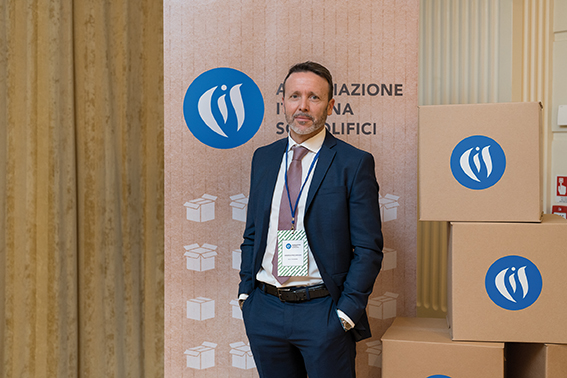
ACIS currently counts over 100 member companies, representing more than half of the Italian market’s turnover of corrugated cardboard converters. Overall, the Italian sector includes about 300 box manufacturing companies, mostly family-owned SMEs based in Lombardy, Veneto, Tuscany, Emilia-Romagna, and Marche. The industry generates an annual turnover of €1.3 billion, employs over 5,000 people, and converts more than 2 billion square meters of corrugated board each year. “Our statute allows only independent companies to join, those not owned by cardboard producers, to ensure an autonomous and coherent representation of converters’ interests”, explains president Andrea Mecarozzi.
A supply chain rooted in the local territory
Box manufacturers almost always operate close to their customers. Because cardboard has a low value-to-volume ratio and high transport costs, the industrial logic has always been to produce near the end user. This has encouraged the development of highly specialized local districts, perfectly integrated into the economic and social fabric of their territories.
The typical Italian SME model is characterized by flexibility, customer focus, and the ability to grow alongside partners. “Our companies pick up on local market needs in real time, without the need for costly market research”, adds the president.
Technical and aesthetic evolution of packaging
In recent years, packaging has undergone a significant aesthetic evolution. “If in the 2000s the most appreciated boxes were glossy and laminated, today consumers prefer natural packaging, made with recycled paper, visible textures, and minimalist graphics”, says Mecarozzi. Simplicity now communicates authenticity and sustainability, turning the box into a true communication tool. Printing on recycled and more porous materials has required notable technological advances. “Printing on coated paper is easy; doing it on recycled paper that absorbs ink is another story. Our companies have evolved a lot in this direction”, explains the president.

Packaging as a communication medium
Corrugated cardboard is no longer just a container but a strategic communication medium. “Italy is the second-largest producer of paper and cardboard in Europe, after Germany”, recalls Giovanna Pandini, director of the Association. “Neutral, natural surfaces are increasingly used to convey messages of sustainability or to host subtle branding elements like QR codes or essential logos. Packaging is one of the most widely seen media: it enters every home, is touched, opened, reused. In the future, we could even imagine the box as advertising space or a vehicle for environmental awareness messages”, adds Giovanna.
Sustainability and circular economy
SMEs in the sector increasingly act as consultants to their clients. “We advise them to certify their packaging with recognized labels like FSC or PEFC, and to include clear and accurate messages such as ‘Box made from recycled material.’ You can’t claim ‘100% recyclable’ if the packaging is contaminated with other materials”, explains Mecarozzi. Transparent communication has become an integral part of the sector’s environmental responsibility. “These are messages that benefit everyone: companies, consumers, and the reputation of corrugated cardboard as a whole”, adds Giovanna.
The sector contributes significantly to Italy’s circular economy: in 2024, 92.5% of paper and cardboard packaging was recycled, with 80% of fibers coming from recycled material and the remaining 20% from sustainably managed forests. Thanks to this virtuous system, Italy accounts for about 15% of Europe’s paper and cardboard collection. “Our industry is already aligned with eco-sustainable practices that will soon become mandatory under the PPWR, such as using high percentages of recycled material and producing monomaterial packaging; the EU Regulation is a challenge mainly bureaucratic, but our companies are ready to innovate further and replace high-impact materials”, underlines Mecarozzi.
Training, networking and new challenges
ACIS has recently published a manual of good manufacturing practices and launched regional meetings to strengthen its associative network. After successful events in Veneto and Tuscany, the latest meeting in Lombardy saw the participation of numerous companies not yet affiliated with the association. Among the most recent initiatives was also a webinar on the EU Deforestation Regulation (EUDR), which attracted more than 70 companies.
“The regulation aims to trace the entire supply chain of raw materials from the tree to the box. The goal is commendable, but the bureaucratic complexity risks weighing heavily on SMEs; we will continue to work with legislators and defend a sector that represents Italian excellence in terms of sustainability, innovation, and local roots. Only by working together we can face the challenges of the coming years”, explains Mecarozzi.

National assembly of the Italian Box Manufacturers Association – October 17–18, Bardolino (VR)
The National Assembly in Bardolino confirmed the solidity of the sector: most member companies reported stable or growing production and turnover. 2026 will be a key year for the Italian Box Manufacturers Association, which is called upon to strengthen institutional support, promote training, and consolidate collaboration across the entire corrugated cardboard supply chain.

Dialogue across the supply chain
“The Italian Model in corrugated cardboard packaging manufacturing: present and future prospects of a European uniqueness” was the theme of the roundtable discussion held alongside the assembly. This discussion brought together different stakeholders from the corrugated packaging production chain, with a focus on the role and future outlook of box-converting companies.
Francesco Zago, CEO of Pro-Gest, emphasized how converters have become central to the Group’s strategies, recognizing them as primary clients. The common goal, according to Zago, is to keep Italy at the forefront of packaging innovation.
Amelio Cecchini, president of Comieco, presented the latest updates from the Consortium, providing information on the new “CAC Carta” and the new contribution bands recently introduced by CONAI. He also highlighted the sector’s ability to expand into market segments traditionally unrelated to paper packaging.
Francesco Torselli, member of the European Parliament, joined remotely, providing updates on PPWR and EUDR regulations and stressing the crucial importance for businesses to network and engage with institutions, which need to collaborate with market players to fully understand the specific issues of different industrial sectors.
“Bardolino Assembly confirms the stability and growth of the box manufacturing sector, despite a complex economic landscape; our top priority for 2026 will be institutional support to address the challenges posed by European regulations, particularly PPWR and EUDR: our strength lies in teamwork not only among box manufacturers, but across the entire supply chain, to drive corrugated cardboard toward ambitious goals”, said Mecarozzi.