


In the choices we make when standing in front of a wine shelf, there’s always a decisive moment: a quick glance, a detail that attracts us, an emotion that sparks curiosity. Often, the choice boils down to a simple phrase: “because I like the label”. However, behind that spontaneity lies a complex ecosystem made of research, materials, design, technology, and vision. It is the intersection of creativity and industry that transforms a label into an experience
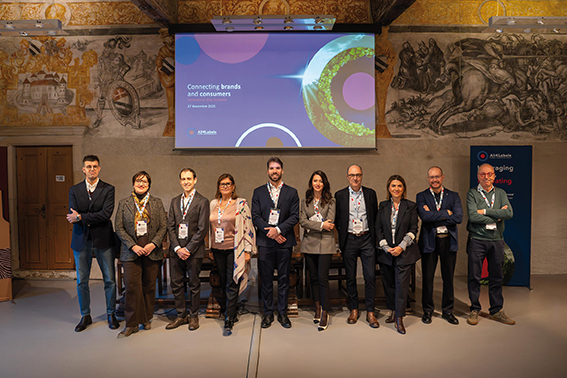
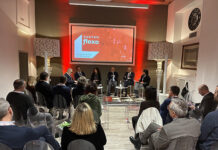
At the Innovation Day Wine Market 2025, organized by All4Labels in the stunning setting of Castel Mareccio in Bolzano, this awareness emerged clearly. A day that brought together brand owners, designers, printers, material suppliers, and professionals from the industry, offering both a concrete and inspired look at the future of packaging.
After the opening remarks by Domenico Bianco, Site Director of the All4Labels facilities in Bolzano and S. Giuliano Milanese. Paola Iannone, VP of Marketing & Communication, presented the broader meaning of the initiative. The Innovation Day was the first step in an international project aimed at viewing Wine & Spirits packaging as an integrated system where creativity, research, education, and new technologies come together to respond to a rapidly evolving market.
This project is set to become a traveling exhibition, with an international roadshow discussing key issues in the industry today: brand seduction, cultural perceptions of wine, new narrative languages powered by artificial intelligence. The goal is clear: helping companies understand how codes are changing and how to build authentic responses to the new demands of consumers.
Market, consumption, and new visual codes
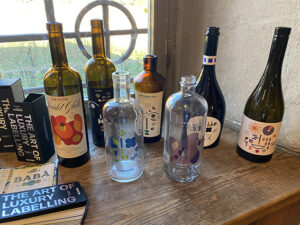
The contribution of Matteo Borrè, founder of WineCouture, provided the socio-cultural context in which the wine sector operates today. Consumption is down in volume but up in value: people drink less, but they drink better. Attention to quality, transparency, well-being, and especially experiences that go beyond the product is increasing.
New generations are not abandoning wine, but they are experiencing it in a different way. They seek authenticity, understandable sustainability, but also usability, immediacy, and content that can live across multiple channels. In a scenario where ready-to-drink products, functional beverages, and alternating alcoholic and non-alcoholic consumption are on the rise, packaging becomes a central player: it doesn’t just accompany the product, but shapes its perception and often decisively influences the choice.
Materials become language
The theme of materials was at the heart of the presentation by Antonio Abruzzese, Business Development Manager for Italy and DACH at Fedrigoni Self-Adhesives. New-generation papers and adhesives are no longer just printing surfaces, but identity tools that are functional and tactile, designed to withstand extreme conditions, from humidity to the ice bucket, without losing their aesthetic quality.
Textures, absorbency, fiber composition, wet-strength solutions: every variable becomes a design choice with a precise narrative intention. When materials are thoughtfully designed, paper stops being a support and becomes an integral part of the sensory experience, enhancing the brand’s positioning and storytelling.
The creative process: between listening and industrialization
With Vincenzo Maccarone and Tommaso Pecchioli from Officina Grafica, the focus shifted to the heart of a label project: the creative process. A path that begins with a deep understanding of the brand and its context, moves through market and target analysis, and ends with the visual translation of an identity.
A key step is industrialization, often perceived as a limitation, but in reality, essential to making an idea tangible. This is where creativity and technique meet, transforming a concept into a reproducible, applicable, and consistent object over time. It’s a delicate balance, where craftsmanship and technology coexist to create labels capable of standing out in an increasingly crowded market.
The power of detail: technologies that evoke emotion
The presentation by Alessandro Carnevale, Brand Ambassador & Sustainability Manager at Luxoro / KURZ, brought attention back to the value of detail as an emotional and perceptual lever. Foils, micro-engraving, light and touch variations are not just embellishments, but true narrative tools, capable of strengthening the perception of value and authenticity.
Today’s technologies enable increasingly refined, measurable, and sustainable enhancements: thin metallizations, cold-transfer solutions, and targeted applications that reduce material use without compromising visual impact. An invitation to #seetouchfeel, borrowing from Luxoro’s hashtag, to rediscover packaging as a sensory object, not just an aesthetic one.
Innovation and smart labeling: All4Labels vision
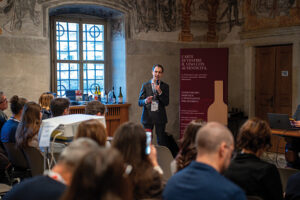
The moment most focused on innovation was led by Matteo Dosso, Project Artworks & Innovation Manager for Italy at All4Labels, who presented two key and highly interesting technologies developed by the company to redefine the very concept of a label.
STARDIRECT™ enables a no-label look by transferring the decoration directly onto the container. A solution that reduces material use, enhances minimalist design, and opens up new expressive possibilities, especially for brands looking for a clean and contemporary aesthetic.
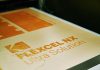
STARSHINE™, on the other hand, is an on-demand metallization technology that delivers premium effects while reducing waste, emissions, and scrap. A concrete response to the need to combine creativity, production performance, and sustainability.
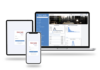
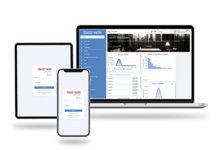
Alongside these solutions, All4Labels offers smart technologies like holography, RFID, NFC, ERFID, and QR fingerprints, integrated with digital dashboards for flow control and brand protection. These technologies turn the label into a true digital touchpoint, capable of creating relationships, ensuring security, and adding value.
The role of design: direction, truth, and anti-homologation
The closing speech by Pasquale Di Meglio from nju:design took the discussion to a more cultural and strategic level. In a market that is increasingly crowded and often homologated, being different is not an aesthetic choice but a design necessity.
Today, design must do more than please: it must guide, build preference, defend economic and cultural value. In a context where the risk of superficial rhetoric, especially on sustainability, is rising, packaging is called upon to recover truth, readability, and respect for materials. An invitation to overcome visual homologation and work on coherent and long-lasting branding systems.
Throughout the day, a shared vision became clear: Wine & Spirits packaging is no longer an isolated stylistic exercise, but the result of a complex balance between market, materials, design, and technology. It is within this intertwining that that decisive moment in front of the shelf takes shape, when a glance stops, and a bottle stands out. Not by chance, but because behind that label lies a thoughtful project, capable of turning packaging into an experience.
Live poll: what does the supply chain really think?
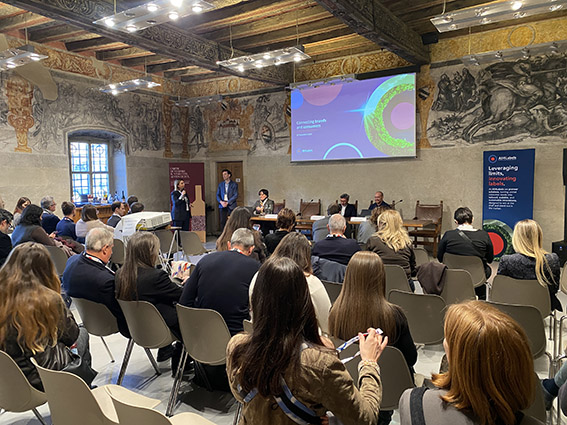
During the day, participants were engaged in a series of live polls that provided an interesting snapshot of collective opinion.
It clearly emerged that the label is increasingly seen as a storytelling and brand positioning tool rather than a purely commercial lever. At the same time, the majority recognizes the central role of digital communication, viewing the label as a bridge to phygital experiences that extend the story beyond the physical packaging.
On the front of materials and enhancements, the results highlight a positive tension between materiality, visual impact, and sustainability, confirming that the future of packaging lies in integrating these dimensions rather than opposing them.