




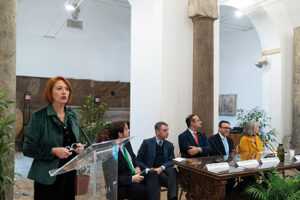
On January 14, Sala del Carroccio in the Capitoline Hill in Rome hosted the conference “The key role of paper and cardboard in Italy’s ecological transition”, organized by the Italian Box Manufacturers Association (ACIS) with the support of the Department of Agriculture, Environment, and Waste Management of Rome. A research study on the current state of the industry was also presented
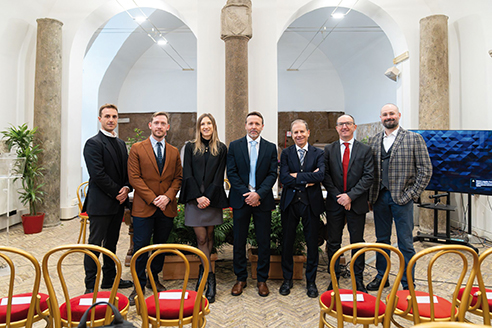
ACIS has been committed for a long time to disseminating information and promoting greater market understanding and awareness of the unique characteristics of corrugated cardboard, a material that is also a key component in the paper recycling process. With equal determination, the Association is at the forefront of a process of dialogue and collaboration with supply chain stakeholders in the places and at institutional tables where the most important decisions are made. “If we consider the number of objects each of us uses in our daily lives, we can’t help but point out that virtually everything has been packaged and transported in corrugated cardboard packaging. And given the importance of 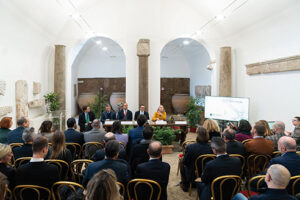 our sector within the Italian manufacturing landscape and the recycling supply chain, ACIS promotes initiatives involving the key players in the supply chain and wants to participate to decision-making tables”, begins Andrea Mecarozzi, ACIS president. The conference held on January 14th at Rome’s Capitoline Hil provided an important opportunity for discussion between institutions and industry professionals. The presentation was preceded by remarks from Sabrina Alfonsi, council member for the Environment, Agriculture, and Waste Management of Rome; Fabrizio Penna, Head of the Mission Unit for the PNRR at Ministry of the Environment and Energy Security; Andrea Mecarozzi; Bruno Manzi, president of AMA; and Carlo Montalbetti, general manager of Comieco.
A context of growth and sustainability
During the meeting, it was emphasized that the growth of corrugated cardboard packaging sector represents one of the most significant phenomena in the Italian packaging market, supported by the expansion of e-commerce and development models increasingly focused on sustainability. Italy remains Europe’s second-largest corrugated cardboard producer, just behind Germany and ahead of Spain and France, thanks to a solid, innovative sector strongly oriented towards circular economy.
A significant finding is the recycling rate of cellulose packaging, which reached 92.5% in 2024, exceeding the targets set by the European Union for 2030 by years and confirming the excellence of the Italian collection and recovery system.
According to Sabrina Alfonsi, “paper and cardboard recycling sector represents a driving force for environmental transition and sustainability. The amount of material collected and sent for recovery demonstrates a growth, including cultural growth, that is now structural and lasting”. In the Rome metropolitan area, for example, separate waste collection of paper and cardboard exceeded 258,000 tons in 2024, a significant increase compared to the previous year.
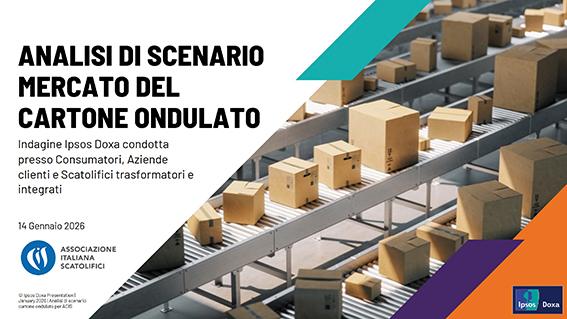
Ipsos Doxa research: consumers, businesses, and perspectives
Ipsos Doxa research, conducted between October and December 2025 on a representative sample of Italian consumers, explored the perceptions and behaviors of consumers, packaging purchasing companies, and corrugated cardboard manufacturers.
Consumers – corrugated cardboard remains a familiar and trusted material for Italians: 8 out of 10 say they are familiar with its functions and characteristics. The rise of online shopping has strengthened the presence of this packaging in homes: over 50% of consumers frequently interact with cardboard boxes, especially among young adults and in Northern Italy. More than half of those interviewed noted the replacement of less sustainable packaging materials (such as bubble wrap and rigid plastic) with cardboard. Reusing boxes for home storage, personal shipping, or creative recycling on the second-hand market is also common.
Corporate clients – In the B2B segment, i.e., companies that purchase corrugated cardboard packaging for their businesses, satisfaction is high. All sectors analyzed, from food & beverage to electronics, from clothing to furniture and plumbing, reported increased purchases of corrugated cardboard packaging over the past year, with an average increase of 57%. Nine out of 10 companies are satisfied with these packaging solutions, with 100% satisfaction in the electronics industry and an average across industrial sectors of 94%.
Companies report a growing importance of customized and personalized solutions, with over eight out of ten companies considering them essential for competitiveness. 51% of companies reported the replacing of less sustainable materials (plastic, polystyrene, etc.) with corrugated cardboard solutions. Looking to the future, companies are demanding lighter, more durable, sustainable, modular, and digital solutions to reduce overpackaging and improve logistics efficiency.
 Converting and integrated box factories – The research paints a picture of a sector deeply rooted in the Italian manufacturing fabric, composed primarily of small and medium-sized businesses serving a diversified national market. Among the main challenges reported by box factories are competitive pressure on prices, the difficulty in finding qualified personnel, and competition with larger operators. At the same time, customization of offerings and innovation in sustainability are now structural elements.
Implications for the paper and cardboard Industry and future trends
The data presented confirm that paper and cardboard are not just packaging materials, but strategic assets for Italy’s ecological transition. For paper and card companies, the Ipsos Doxa research offers concrete insights for guiding product strategies, investments in innovation, and communication with customers and consumers. In a context where sustainability is becoming a competitive factor, focusing on efficiency, customization, and recyclable materials is a key lever for maintaining and increasing the sector’s role.
The substitution of materials such as plastic and wood will continue to drive demand for corrugated cardboard packaging, a sector that will need to continue investing in technology, innovating processes to increase productivity and quality, and increasingly focusing on digital printing, ideal for brand customization needs. From a strategic standpoint, the trend of large groups absorbing small businesses will continue, just as the merger of small and medium-sized businesses will continue, precisely to maintain a high level of competitiveness and service, especially compared to more structured companies.
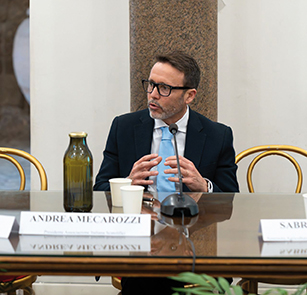
“We are proud to be part of a supply chain that represents excellence at the European level and offers further concrete prospects for growth and innovation. With this research, we aimed to analyze perceptions and future scenarios in the sector, gathering the perspectives of packaging purchasing companies, producers, and consumers. A clear and coherent picture emerges: corrugated cardboard is an increasingly well-known and appreciated material, growing and widely recognized for its high level of sustainability”, commented Andrea Mecarozzi.