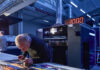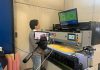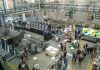



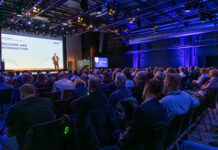

During Flexo Day 2025, Alessandro Selmin, now at the helm of Sacchettificio Nazionale G. Corazza, took centre stage in the session dedicated to Histories of companies, retracing the key milestones of the company’s and his personal journey that led him to manage one of the longest-standing players in the industry. A testimony rich in family identity, strategic choices, that demonstrate the ability to evolve in an increasingly competitive market.
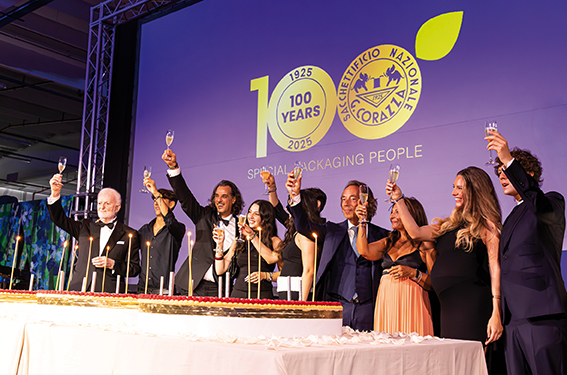
“Packaging specialists since 1925” is the claim featured on the homepage of Sacchettificio Nazionale G. Corazza, a company that has just joined the ranks of centenarian businesses. Today it employs around 240 people, with a turnover of € 90 million, and produces 200 million bags per year, with exports accounting for between 70% and 75%: an international vocation that dates back to the 1980s.
And despite diversification and a strong presence in the converting sector, the company’s identity remains firmly rooted in printing, as emphasized by general manager Alessandro Selmin, who recounted the history, evolution, and future of the family business at the latest Flexo Day: “first and foremost, we consider ourselves printers. It’s our culture: quality, attention to detail, focus on results”.
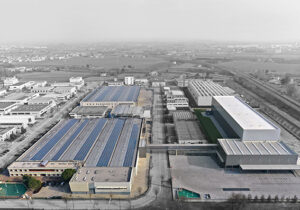
A tradition deeply rooted in the artistic training of Selmin’s father, among the first in Italy to experiment with off-line flexographic printing in the 1970s. Selmin began his story by recalling how he joined the company at a very young age after graduating in Economics and Business Administration in the late 1990s. At that time, his father Benito, already general manager, had the possibility in the late 1980s to become a partner: in fact, in 1988 ended the direct management of the Corazza family, who had led the company since its foundation in 1925. Benito Selmin, a key figure who has led the company ever since, joined the shareholder structure. This immediately gave the entire company a strong new impetus, including from a managerial standpoint, an impetus that continues today.
“Perhaps I skipped a few steps, and maybe I missed some external experience. But growing from within helped me truly understand what it means to carry forward such a long history”, Selmin continues. Today, with an eye on the new generations, he encourages more articulated paths: “I would advise my children to gain experience elsewhere first, to really understand what they want and whether they wish to return to the company. If they decide to continue, I will be happy to pass on our values and my experience; otherwise, they will be free to follow their own paths”, Alessandro adds.
A company with a strong identity that looks to future challenges with renewed enthusiasm
In his story, Alessandro Selmin, who today also holds the important position of president of Eurosac, the European federation representing 80% of medium – and large-capacity industrial paper sack manufacturers, spent considerable time reflecting on his father, described as a “far-sighted” entrepreneur, capable of reading change and breaking with established patterns.
One example above all: the decision in the late 1990s to enter the flexible packaging market, a segment far from the traditional paper converting business.
“At the time it almost seemed like heresy, we didn’t know the materials or the processes, but we immersed ourselves completely in exploring a new world.
e learned, often facing the difficulties typical of pioneers. Today we can say we won that bet, which changed the group’s trajectory, so much so that flexible packaging now represents 50% of total business”.
On the innovation front, Selmin claims a steady but balanced approach: “we grow step by step. The market is fast, but leaps that are too long risk undermining what has been built”. A vision strongly tied to solidity and the economic sustainability of industrial choices.
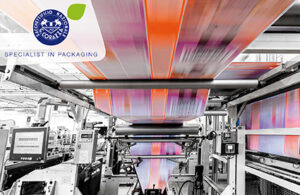 Alessandro presented also a reflection on the Italian context, marked by bureaucracy and structural sluggishness. “Relocating production would have brought immediate advantages”, he acknowledges, “but it would have weakened us in the long term, especially in skills development.
Human capital remains one of the company’s key assets, as specialization in technically complex segments such as pet food, where quality and continuity are essential requirements. Today we can define ourselves as specialists in difficult challenges, that is what sets us apart and is the feature that market recognizes”.
Ma la sfida più grande resta una, comune a gran parte del settore: le persone. “Oggi è difficile trovare collaboratori con passione, pronti a crescere e mettersi in gioco. Senza questo motore interno, nessuna tecnologia e nessun investimento possono bastare”, conclude Selmin.
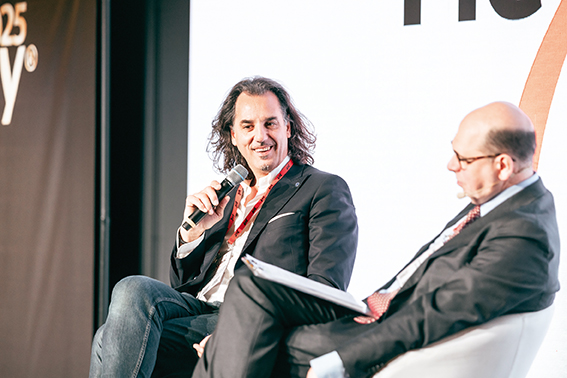
We wanted to delve deeper into some topics, which we revisit below in our one-to-one interview with Alessandro Selmin
Looking at the next 5–10 years, what are the strategic lines on which Sacchettificio Nazionale G. Corazza will invest most?
“Human resources and technology, to further expand the diversification of the products we can offer our customers. Sustainability not only of the products supplied, but a 360-degree approach, i.e., from an ESG perspective”.
How is customer demand in pet food changing, and how does this influence your production and technological choices?
“The trend toward recyclable and sustainable packaging driven by the new PPWR requires technological adjustments and accelerated investments, in order to continue converting the most recent materials, more complex to process and still partially under development, into packaging with high quality standards”.
In a sector that increasingly talks about sustainability, what do you believe are the most urgent areas to address in industrial sacks and flexible packaging?
“Clear and detailed regulations from the European Community as soon as possible, in order to make the PPWR operational quickly, unambiguously, and without room for interpretation”.
What kind of technical and human skills are you looking today in a young person joining the company? And how do you plan to attract new talent?
“We must increasingly make our companies attractive. We are a manufacturing business, and today manufacturing is not attractive. Our factories of the past have become modern production plants rich in innovation and technology. We must continue along this path, transforming operational work more and more into highly specialized technical work focused on control and supervision, thus elevating this profession compared to the past and making it attractive to those who enjoy seeing something created everyday thanks to advanced technology. The spark we all look for in the eyes of new hires is passion. It is our duty and responsibility to do everything we can to ignite it. Of course, there must always be some fertile ground to begin with”.